Review: Romantic Highland Cow Rose Heart Tumbler Design
As a designer who spends more time staring at stitch maps than most people spend on their phones, I approach every new digital embroidery file with a mix of curiosity and skepticism. We have all been burned by beautiful previews that turn into thread nests on the hoop. So, when I came across the Romantic Highland Cow Rose Heart Tumbler, I didn't just look at the pretty preview; I looked at it through the lens of production. This isn't just a graphic for a sublimation printer; for us stitchers, it represents a potential handmade product that needs to hold up under the needle.
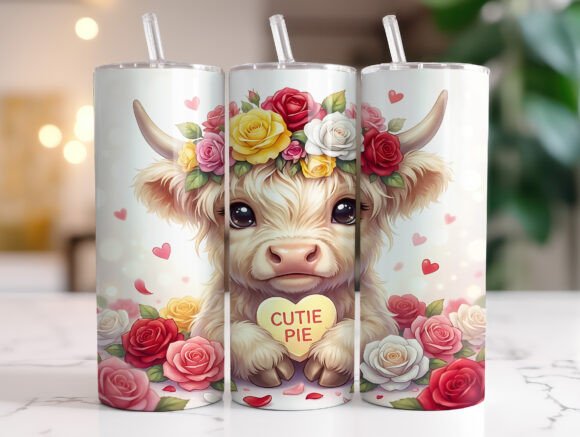
The first impression of this design is undeniably charming. It taps into that massive trend of Highland cows—shaggy, sweet, and incredibly popular right now—but pairs it with a romantic rose heart motif that softens the rugged animal aesthetic. The mood is cozy, boutique, and perfect for the current market demand for "cottagecore" vibes. However, my immediate thought wasn't about how cute it is, but how those fine details would translate into actual thread. The description notes this is a high-resolution 300 DPI PNG intended for tumbler wraps, which tells me the original intent was printing. For an embroiderer, this means we are looking at a design that likely needs to be digitized or carefully adapted if we want to use it for custom apparel or textured goods.
Visual Personality and Market Fit
The layout of the Romantic Highland Cow Rose Heart Tumbler features a strong central focus. The cow's face, framed by the heart and roses, creates a natural focal point that draws the eye immediately. In a retail setting, whether it's an Etsy seller's shop or a local craft fair booth, this kind of clear visual hierarchy is gold. Customers scrolling through hundreds of listings need something that stops them in their tracks. The combination of the animal portrait with floral elements suggests a product that appeals to a wide demographic, from teenagers who love animals to adults looking for sophisticated nursery decor.
If I were to integrate this into my craft business, I wouldn't limit myself to tumblers. While the source file is optimized for curved surfaces as a print, the imagery screams for a high-quality embroidered patch. Imagine this design stitched onto a denim jacket or a canvas tote bag. The contrast between the rough texture of denim and the soft, detailed stitching of the cow's fur and the rose petals would create a tactile experience that a flat print simply cannot match. This is where the value of a machine embroidery design truly shines—it adds dimension and perceived value to the finished product.
Real-World Application Scenarios
Let's get practical. I recently had a client request a series of gifts for a bridal party who all happen to be cattle ranchers with a sense of humor. They wanted something that wasn't the usual monogram. The Romantic Highland Cow Rose Heart Tumbler concept fits this perfectly. If I were executing this as an embroidery project, I would likely place it on a high-quality sweatshirt or a structured cap.
For a sweatshirt embroidery project, the size mentioned (9.3″ x 8.2″) is quite large. This works well for the back of a hoodie or the full front of a tote bag. However, for a cap, this dimensions would be impossible without significant scaling down. This brings up a critical point for any designer using this asset: scalability. When you shrink a detailed image like this for a baby embroidery project on a onesie or a small pocket logo, you risk losing the definition in the cow's eyes or the petals of the roses. The stitch density would need to be carefully managed to prevent the design from becoming a solid blob of thread on smaller items.
Consider also the application for holiday embroidery. With Valentine's Day approaching, the heart motif makes this a no-brainer for limited-edition runs. A pillow cover featuring this design, perhaps with a satin stitch border to mimic the clean lines of the original graphic, could be a best-seller. The key here is fabric selection. A smooth, tight-weave cotton or linen would allow the details of the roses to pop, whereas a highly textured wool might obscure the finer points of the design.
Technical Considerations for Stitching
Since the provided files are PNGs intended for printing, any embroiderer looking to use this for a commercial embroidery project must understand that this is not a ready-to-stitch file. You cannot load a PNG directly into most embroidery machines and expect a perfect result. This image serves as an excellent reference for digitizing or as a base for creating an applique design.
If you choose to go the applique route, which I highly recommend for a design with this much detail, you can capture the shading of the cow's fur using fabric rather than thousands of stitches. This reduces stitch density, making the final item softer and more comfortable to wear. It also speeds up production time, which is crucial for small shop products where margins matter. You would need to select fabric textures that mimic the shaggy look of the Highland cow, perhaps using a faux fur or a brushed cotton for the animal portion, and a smooth satin for the roses.
There are specific areas where caution is required. The transition between the dark fur of the cow and the bright red of the roses requires precise color changes. If you are digitizing this yourself, pay close attention to the underlay stitches. Without proper underlay, the dark threads might peek through the lighter rose petals, ruining the crispness of the design. Additionally, if you are stitching on dark fabric, you may need to adjust the thread colors or add a light-colored underlay to ensure the roses don't look muddy.
Practical Designer Notes
Before committing to a full production run, I always advise running a test on scrap fabric that matches your final material. Check the thread colors against the digital preview; screens lie, and thread spools vary by brand. Ensure your hoop size can accommodate the design if you plan to stitch it at full scale, though I suspect most applications will require resizing.
- Stabilizer Selection: For stretchy fabrics like t-shirts or baby clothes, a cut-away stabilizer is non-negotiable to prevent distortion over time. For woven fabrics like tote bags, a tear-away might suffice, but given the size of this design, I'd lean towards cut-away for durability.
- Detail Inspection: Look closely at the eyes of the cow. In embroidery, small details can easily get lost. You may need to simplify these areas or use a darker thread outline to define them.
- Licensing Check: Since this is sold as a digital graphic for printing, verify the license terms before selling embroidered versions. Some creators allow personal use only, while others permit commercial use of finished physical goods. Never assume a print license covers embroidery sales.
- Mockup Testing: Create black and white mockups to see how the design holds up without color. If the contrast fails in grayscale, it might struggle on low-contrast fabrics in real life.
Ultimately, the Romantic Highland Cow Rose Heart Tumbler offers a fantastic visual foundation for creative entrepreneurs. It has the emotional appeal that drives sales and the versatility to work across various mediums if handled correctly. Whether you are creating a personalized gift for a friend or building a line of boutique branding merchandise, the success of this design lies in the execution. Treat it as a high-quality art piece that deserves the right medium. Don't force it onto a surface where it can't breathe. Instead, let it shine on materials that complement its rustic yet romantic nature. By respecting the technical limitations and leveraging the artistic strengths of the image, you can turn a simple digital download into a tangible, cherished handmade product that customers will love.