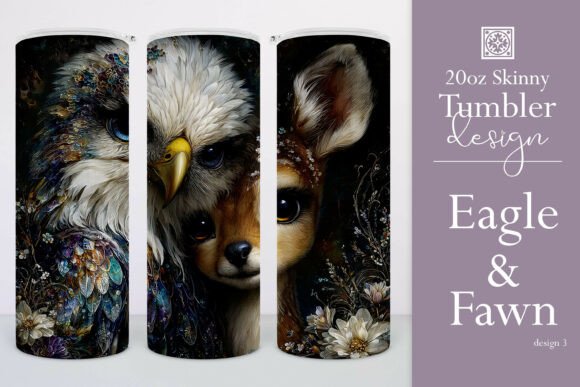
Bald Eagle Deer Tumbler Wrap: A Designer's Review
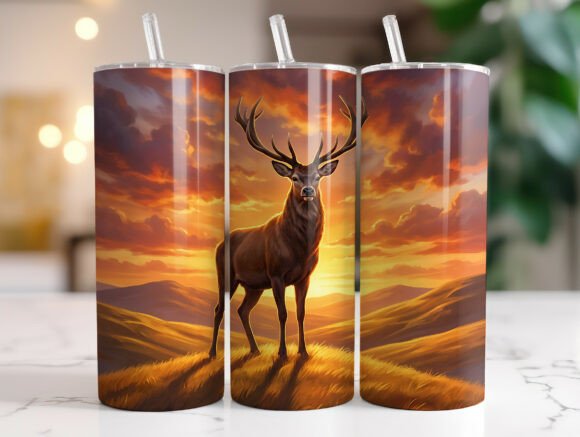
As a designer who spends more time staring at stitch maps than most people spend watching television, I approach every new digital embroidery file with a mix of excitement and skepticism. We've all been there: you buy a design based on a flashy thumbnail, only to find out the stitch density is so high it turns your fabric into cardboard, or the details are so tiny they vanish under the needle. So, when I got my hands on the Bald Eagle Deer 20oz Tumbler Wrap, 3, I didn't just look at the preview; I wanted to know how this graphic would translate into a tangible, stitched reality.
The product description labels this as a Tumbler Wrap intended for sublimation, offering a unique animal style in a high-resolution 300dpi PNG format. While the primary use case is clearly heat transfer for drinkware, my brain immediately started spinning wheels on how this could be adapted for custom apparel and other handmade products. In the world of craft business, versatility is currency. If a design works on a curved tumbler, can it work on a structured cap? Can it become a statement piece on a tote bag? Let's dig into the practicalities.
First Impressions: Mood and Visual Personality
The first thing that strikes me about the Bald Eagle Deer 20oz Tumbler Wrap, 3 is its bold thematic fusion. Combining the majesty of a bald eagle with the grounded presence of a deer creates a rugged, outdoorsy aesthetic that feels perfectly suited for the current market trends favoring nature-inspired decor. The layout appears designed to wrap seamlessly around a cylinder, which suggests a continuous flow in the artwork. For an embroiderer, this implies a design with strong horizontal movement.
Visually, the level of detail in a 300dpi PNG suggests crisp lines and distinct separation between elements. However, translating a raster image meant for printing into a machine embroidery design requires a mental shift. Where the sublimation print relies on gradients and pixel-perfect shading, embroidery relies on satin stitch borders, fill stitch textures, and strategic running stitch outlines. If you are planning to digitize this yourself or hire someone to convert it, the clear contrast in the original graphic is a massive plus. It makes defining stitch directions much easier, ensuring the final finished product retains the visual punch of the source material.
Real-World Application Scenarios
Let's move beyond the theoretical and talk about where this design actually shines in a real shop environment. Imagine a customer comes to your small shop product line asking for a gift for an avid hunter or a nature lover who already has too many mugs. Instead of another sublimated tumbler, you propose a heavy canvas tote bag design featuring this eagle-deer motif. Because the original graphic is a wrap, you could adapt the central focal point for the front of the bag, creating a stunning embroidered patch effect without the bulk of an actual patch backing.
Another viable avenue is sweatshirt embroidery. Picture a charcoal grey crewneck with this design stitched in earth tones—forest greens, slate blues, and golden yellows for the eagle's beak. The rugged theme aligns perfectly with fall and winter collections. For Etsy sellers looking to expand their design assets, this graphic could be the centerpiece of a "Wilderness Collection." You could offer it as a printed option for those who want quick turnaround, and a premium embroidered option for clients willing to wait for a higher-value personalized gift.
I also see potential in holiday embroidery projects. With Father's Day or Christmas approaching, adapting this for a kitchen towel or a pillow cover adds a touch of cabin-core charm to home decor. The key here is recognizing that while the source is a Graphics file for tumblers, the composition is robust enough to stand alone on flat fabrics if scaled correctly.
Technical Considerations and Fabric Challenges
Now, let's address the elephant in the room—or rather, the eagle and the deer. Using a design originally intended for smooth, hard sublimation blanks on soft, textured fabrics requires caution. If you attempt to stitch this directly onto a stretchy fabric like a thin t-shirt without proper stabilization, you risk distortion. The fine details that look sharp on a 300dpi PNG might get lost if the thread colors bleed into each other due to poor tension or low-quality thread.
For baby embroidery or delicate items, I would advise against using the full complexity of this design unless it is significantly simplified. Tiny details, such as the feathers on the eagle or the antlers on the deer, might require extremely fine needles and high stitch counts that could compromise the comfort of the garment. On dark fabric, you must ensure your digitizing includes a proper underlay to prevent the background color from peeking through the fill stitches. This is crucial for maintaining the professional look that builds customer trust.
If you are considering applying this to curved surfaces like caps, remember that the original wrap design is linear. You cannot simply slap a cylindrical wrap onto a curved crown without warping the image. You would need to isolate the central motif and re-digitize it specifically for a cap frame, adjusting the pull compensation to account for the curve.
Maximizing Value and Professionalism
In the competitive landscape of commercial embroidery, the difference between a hobbyist and a pro often comes down to presentation. Using a high-quality source image like Bald Eagle Deer 20oz Tumbler Wrap, 3 gives you a head start. When customers see clean lines and thoughtful color choices, they perceive higher value. This translates to better brand consistency and higher price points for your boutique branding efforts.
However, never skip the testing phase. Before committing to a client order, test the design on scrap fabric that matches the final project material. Check the stitch density; if it feels too stiff, consider reducing the fill percentage or breaking up large solid areas with texture. Review the hoop size requirements to ensure your machine can handle the scale you intend to use. It is also wise to test it in black and white mockups to ensure the contrast holds up even without color, which is a good indicator of structural clarity.
Final Verdict for Makers and Sellers
The Bald Eagle Deer 20oz Tumbler Wrap, 3 is a versatile asset, but it demands respect and adaptation to truly shine in an embroidery context. It is not a plug-and-play applique design straight out of the box for every surface, but as a foundation for creative embroidery project ideas, it is excellent. Whether you are creating printable mockup previews for your online store or stitching a one-off wedding gift for an outdoorsy couple, this design offers strong visual appeal.
Just remember to verify the licensing terms before selling finished items or modified digital versions. The description mentions you receive a PNG for sublimation, so if you plan to sell the embroidered version, ensure your usage rights cover commercial textile applications. By combining this striking graphic with sound embroidery techniques and the right stabilizer, you can create products that not only look great but also stand the test of time and washing. That is the hallmark of a true craft business success.